
Charlottesville, Albemarle County · October 2025
Charlottesville Tulip Poplar Tear-Off & Xtreme Upgrade
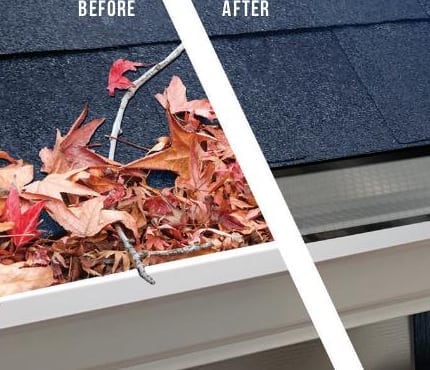
The problem
Existing 5-inch K-style aluminum gutters with foam inserts had failed completely. Tulip poplar seed pods and oak debris had compacted the foam inserts into a wet mat that held water, supported moss growth, and weighed enough to pull hangers. Customer reported water cascading off the front of the gutters during summer thunderstorms and a wet zone along the foundation that wasn't drying.
What we did
Full removal of existing gutters, foam inserts, and old hangers. Replaced fascia in three sections where rot had developed behind the failing system. Installed new 6-inch K-style .032 aluminum with hidden hangers at 24-inch spacing, 3x4 downspouts, and Xtreme stainless steel micro-mesh guards over the entire run. Added two buried discharge lines (4-inch SCH 40 PVC) running 12 feet from the foundation to pop-up emitters past the lawn footprint.
How it turned out
First major rain event two weeks after install was a textbook test. Almost an inch of rain in 40 minutes. New system handled the volume cleanly, all four downspouts running steady streams, no overflow at any corner. Foundation moisture issue resolved within 30 days as the soil dried. Customer reports no maintenance required so far; we have her on the books for an annual top-rinse next October.
The starting point
The home is a two-story 1990s build in a Charlottesville neighborhood with mature tulip poplar canopy on three sides. Customer had hired another contractor a few years earlier to install foam gutter inserts as a “no more cleaning” solution. By the time we got the call, the foam inserts had compacted into a black, wet, organic mat that filled most of the gutter trough.
The mat was heavy enough to pull six hangers loose along one corner. Water that should have entered the gutter was running over the front face during any meaningful rain event.
The customer described the symptom as “water sheeting off the front of the gutters during storms” and a “permanent wet spot in the mulch bed by the front entrance.”
What we found at inspection
We walked the property the morning of the estimate. Findings:
- Six pulled hangers along the front-of-house run.
- Three sections of fascia showing visible rot where water had been wicking behind the gutter for months.
- All eight downspouts at least partially obstructed; two completely blocked at the elbow.
- Soil moisture along 30 feet of foundation, with mulch displaced by repeated overflow events.
- Foam inserts essentially fused into the gutter. Mass of decomposed organic matter mixed with foam material, removable only in chunks.
The customer asked whether we could “just clean it out and reuse the gutters.” We told her honestly: at this point, no. The hangers are pulled, the fascia behind needs work, and the gutter sections themselves had been bent by the weight. Replacement was the right call, not a repair.
The plan
Written quote that day. Three line items separated for clarity:
- Removal & disposal. Pull all existing gutters, foam inserts, and hangers. Haul off-site.
- Fascia repair. Three sections totaling roughly 24 linear feet. Replace with new pressure-treated and primed pine, painted to match existing trim.
- New gutter system. 6-inch K-style aluminum, .032 gauge, in customer’s chosen color (musket brown). Hidden hangers at 24-inch spacing. 3x4 downspouts (8 total). Xtreme stainless micro-mesh over the entire run.
- Drainage. Two buried 4-inch SCH 40 PVC discharge lines running 12 feet to pop-up emitters past the lawn line. Connecting the four worst-impact downspouts (front of house and one rear corner with foundation issue).
The install
Two-day job. Day one: removal, fascia repair, paint cure overnight. Day two: new gutter system extruded on site, hung, downspouts installed, guards installed, drainage trenched and buried. Final cleanup and walkthrough with the customer.
The drainage work added complexity. We had to coordinate with a buried irrigation line and one shallow electrical run. Both were marked correctly by the customer’s lawn care company, which made our trenching straightforward.
Photo documentation
We shot before-and-after photos at every stage and sent them to the customer at the end of day two. We are holding the gallery until Scott confirms customer permission to publish.
Lessons we’ll repeat
This job was a textbook case for the broader pattern we see in Charlottesville: an early “value” gutter guard product (foam inserts in this case) failing at the 4-5 year mark, taking the underlying gutter system and fascia down with it. The customer’s all-in cost. Failed product + new product + collateral fascia repair. Was significantly higher than a quality install would have been from the start.
It’s also a textbook case for why we won’t quote foam inserts. The product fails the customer.