
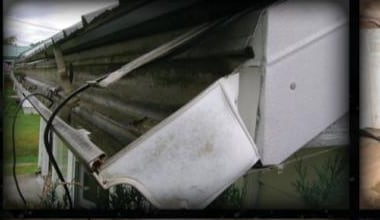
Start with the failure, not a replacement quote
A lot of calls start with a homeowner saying, “I think I need new gutters.” Sometimes they do. Plenty of times they have one bad corner, a loose hanger, a clogged outlet, or a downspout that is dumping water right back against the foundation.
That is the difference between a repair call and a full seamless gutter installation. We look for the actual failure first. If a small repair buys the system more useful life, we say that. If the repair would be a short-term patch on a system that is already failing in five places, we say that too.
In Charlottesville, repair calls usually come from older homes under hardwood canopy: Belmont, Rugby, North Downtown, Locust Grove, Fry’s Spring, and the UVA side streets. The gutter might look like the problem from the ground, but the cause is often wet debris, an old spike-and-ferrule fastening system, or fascia that has been softened by water getting behind the gutter.
Problems we can usually repair
Leaking seams and corners. End caps and miters fail first. If the gutter run itself is sound, we clean the joint, tighten the fasteners, and reseal with a gutter-rated sealant. A single leaking corner is not a reason to replace a whole house.
Sagging gutters. A sagging run may only need re-pitching and new hidden hangers. This is common on older Charlottesville and Albemarle homes where the original spikes have worked loose. If the fascia still holds, repair is realistic.
Loose hangers and pull-away sections. We replace weak fasteners, add support, and make sure the run has proper pitch. If the wood behind the gutter is rotten, the real repair starts with fascia and soffit work.
Failing downspouts. Crushed elbows, undersized 2x3 downspouts, clogged outlets, and missing extensions can all make a working gutter look broken. We fix the discharge path and talk through downspout extensions when water is landing too close to the foundation.
Overflow from debris. Sometimes the repair is a thorough gutter cleaning and a downspout flush. We do not sell repair parts when the system only needs to be cleaned and tested.
Small gutter repairs: one corner, one run, or one downspout
You can request an estimate for an isolated problem rather than a whole-house replacement. Tell us which corner leaks, which run sags, or where the downspout is damaged. The condition of the surrounding gutter and fascia determines whether a local repair will hold.
For your repair estimate, include your ZIP code, the affected side of the house, and whether the problem happens during rain or continues afterward. Mention the number of stories and any porch, deck, or landscaping that limits access. Photos taken safely from the ground can help explain the problem; you do not need to climb up to inspect it yourself.
The written quote should separate the repair from any recommended cleaning, fascia work, or drainage changes. Ask us to confirm current scheduling and the price for your particular job before approving the work.
Repairable vs. replace
A gutter is usually repairable when the metal is not twisted, the fascia is solid, the problem is isolated, and the system is sized correctly for the roof. One bad corner, one loose run, or one downspout outlet is a repair conversation.
Replacement makes more sense when the gutters are sectional and leaking at repeated seams, the metal has been bent by snow or ladders, multiple runs are sagging, the fascia is soft across long sections, or the roof sends too much water to too few outlets. On those jobs, we explain the line between repair and replacement before quoting the work.
If your issue is water collecting near the wall after it leaves the downspout, the gutter may not be the problem. That is when we look at drainage solutions such as buried PVC, pop-up emitters, or a better daylight route.
Fascia warning signs
Pay attention to peeling paint directly behind the gutter, a dark line under the roof edge, soft wood at a corner, or fasteners that will not stay tight. Those are not cosmetic issues. They mean water has been getting behind the gutter or sitting in one place too long.
On repair estimates we check the fascia before tightening anything. New screws into rotten wood are not a repair; they are a delay. If the wood is sound but the finish is tired, aluminum fascia wrap may be part of the better long-term repair.
Where repair calls are most common
Charlottesville and central Albemarle generate the most repair calls because of older rooflines, dense trees, and mixed-age homes. Orange, Barboursville, and Madison bring more metal-roof snow damage. Fluvanna and Louisa calls often include drainage because lake-area lots stay wetter after storms.
Related pages worth reading before you decide: seamless gutter installation, gutter cleaning, fascia and soffit repair, drainage solutions, and Charlottesville gutter service.
Ready for a straight answer? Start with a free written estimate. We will tell you whether the system is worth repairing before we talk about replacement.
For a city-specific version of this checklist, read gutter repair in Charlottesville: warning signs we check first.